
Herbal Oils vs Essential Oils

Formulation failures rarely stem from a lack of intent; they stem from a miscalculation of chemical vehicle behavior. Consider a common R&D bottleneck: a product development team designs a premium night repair serum targeting hyperpigmentation. They select a high-potency botanical extract, assuming its lipophilic phytochemicals will deliver therapeutic efficacy. During pilot batching, however, the formulation exhibits rapid phase separation, unexpected sediment deposition, or a sharp drop in antioxidant activity within 30 days of accelerated stability testing.
The root cause? A fundamental confusion between herbal oils vs essential oils.
Conflating an infused herbal lipid matrix with a volatile, steam-distilled secondary metabolite complex alters more than just the sensory profile. It modifies the skin penetration mechanics, oxidation kinetics, emulsification equilibrium, and the final cost of goods sold (COGS). For an OEM cosmetic manufacturer or a brand manager scaling a private label lineup, selecting the wrong botanical vehicle results in wasted capital, regulatory non-compliance, and compromised shelf life.
This guide provides a comprehensive technical analysis to help formulators, procurement heads, and R&D teams navigate these distinct ingredient classes. By auditing their structural differences, extraction thermodynamics, and interactive behaviors, you can optimize your next skincare formulation, haircare line, or wellness product for both performance and profitability.
Understanding the Two Ingredients Beyond Their Names
Distinguishing between a herbal oil vs essential oil requires looking past commercial marketing vocabulary and focusing on cellular plant anatomy and extraction chemistry.
Extraction Philosophy and Manufacturing Thermodynamics
Herbal oils—frequently categorized by a herbal oil manufacturer as infused herbal oils or herbal extract oils—are dual-entity systems. They rely on mass transfer principles where a lipophilic solvent (a fixed carrier oil like sunflower, sesame, or jojoba) draws out non-volatile, oil-soluble constituents from botanical matter. The manufacturing process involves prolonged maceration, sometimes assisted by controlled thermal energy, to break down plant cell walls and dissolve active metabolites into the solvent matrix. The resulting fluid contains both the carrier oil's triglycerides and the captured botanical compounds.
Conversely, an essential oil manufacturer isolates pure, volatile secondary metabolites. This process uses steam distillation, hydrodistillation, or dry expression (for citrus rinds). High-pressure steam passes through the plant matrix, rupturing specialized secretory structures like glandular trichomes, oil cavities, or resin ducts. The vaporized volatile compounds are then condensed and separated from the aqueous hydrosol phase via density differentials.
Chemical Composition and Volatility Profiles
The chemical fingerprint of an infused herbal oil consists primarily of long-chain fatty acids (e.g., oleic, linoleic, palmitic) derived from the carrier oil. Suspended within this lipid framework are oil-soluble phytochemicals like carotenoids, phytosterols, tocopherols, and trace lipophilic polyphenols. These molecules are large, non-volatile, and possess high molecular weights, meaning they do not evaporate at room temperature.
Essential oils completely lack triglycerides. Instead, they are complex mixtures of low-molecular-weight volatile organic compounds (VOCs), predominantly hydrocarbons and oxygenated derivatives. These are broken down into:
- Monoterpenes (e.g., limonene, pinene)
- Sesquiterpenes (e.g., caryophyllene, chamazulene)
- Monoterpenols and Sesquiterpenols (e.g., linalool, alpha-bisabolol)
- Phenols, Aldehydes, and Ketones (e.g., carvacrol, citral, carvone)
Because of their low molecular weight, these molecules exert significant vapor pressure at ambient temperature, yielding intense aromatic and biochemical activity.
Concentration and Potency Metrics
The active concentration differential between these two categories is vast. An essential oil represents the hyper-concentrated, isolated volatile essence of the plant; it can require anywhere from 10 to over 3,000 kilograms of raw botanical material to produce a single kilogram of pure distillate. They are highly potent biochemical agents that typically require low usage levels in cosmetic formulation work.
Infused herbal oils operate on a much lower concentration scale regarding individual plant metabolites. However, they provide dual functionality by delivering both the target botanical actives and the emollient, barrier-repairing properties of the fatty acid carrier matrix.
Technical Comparison Matrix
The following structural profile details how these raw materials behave under industrial manufacturing and formulation conditions.
| Technical Parameter | Infused Herbal Oils | Pure Essential Oils |
|---|---|---|
| Primary Extraction Method | Lipid maceration / solvent digestion / percolation | Steam distillation / hydrodistillation / cold expression |
| Active Concentration | Dilute to moderate (dependent on drug-to-extract ratio) | Extremely high (100% volatile secondary metabolites) |
| Volatility & Vapor Pressure | Non-volatile; negligible vapor pressure at 25°C | Highly volatile; high vapor pressure at 25°C |
| Aromatic Intensity | Mild, characteristic, oily, or herbaceous undertones | Intense, characteristic, concentrated botanical aroma |
| Typical Cosmetic Usage Levels | 1.0% to 100.0% (can serve as base vehicle) | 0.1% to 1.0% (restricted by safety and IFRA limits) |
| Oxidative Stability Profile | Dependent on carrier oil saturation (high for jojoba, lower for rosehip) | Prone to rapid oxidation and polymerization when exposed to UV/air |
| Primary Formulation Role | Emollient, barrier repair, active delivery vehicle, lubricant | Functional active, natural fragrance, antimicrobial, therapeutic agent |
| Viscosity & Rheology | Medium to high viscosity; non-Newtonian or Newtonian lipid flow | Low viscosity; highly fluid, water-like mobility |
| Sourcing & Scalability | Scalable; dependent on carrier oil yields and crop cycles | High volume requirement; volatile pricing based on weather and yield |
| Documentation Requirements | CoA, TDS, SDS, Cruelty-Free/Organic Certifications | CoA, TDS, SDS, IFRA Conformity Certifications, Allergen Breakdown |
When Herbal Oils Make More Sense
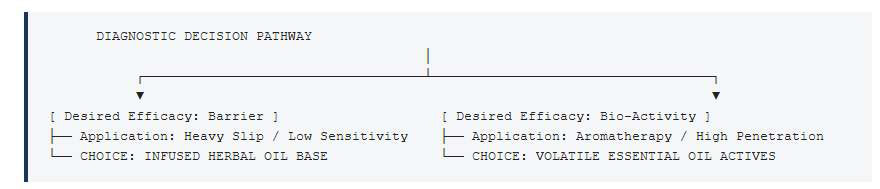
Selecting infused herbal oils is often the preferred strategy when formulation goals prioritize lipid barrier restoration, extended skin contact, low irritation potential, or traditional Ayurvedic positioning.
Professional Massage Oils and Body Treatment Matrices
In professional spa therapies and physical wellness lines, slip and lubricity are critical operational metrics. Essential oils absorb too rapidly into the stratum corneum when applied neat and lack the molecular weight needed to reduce surface friction. Infused herbal oils (such as Arnica-infused sunflower or sesame oil) provide a sustained cushion on the skin. This allows for prolonged manipulation without structural drag or the need for frequent reapplication, while simultaneously delivering deep lipophilic botanical benefits.
Pediatric and Sensitive Skin Formulations
The compromised or developing epidermal barrier of infants and individuals with atopic dermatitis requires non-reactive ingredients. Essential oils contain volatile molecules like linalool, limonene, and citral that can turn into skin sensitizers upon oxidation. Infused herbal oils, such as Calendula-infused jojoba or sweet almond oil, offer a safer alternative. They provide soothing oleic and linoleic acid chains that reinforce intercellular lipids without introducing highly volatile compounds to hyper-reactive skin.
Authentic Ayurvedic and Holistic Formulations
Traditional wellness systems often rely on the synergistic effect of whole-plant extraction rather than isolated volatile compounds. When engineering a classical hair oil or body balm, using a herbal oil manufacturer ensures that the full spectrum of non-volatile active compounds—such as phytosterols, saponins, and flavonoids—is captured within a traditional base lipid like sesame or coconut oil. This delivers an authentic product profile that aligns with clean beauty and holistic industry standards.
Industrial Haircare and Scalp Treatments
In trichological applications, the scalp benefits from structured lipid nourishment. Infused oils containing extracts like Bhringraj, Amla, or Brahmi supply fatty acids that coat the hair shaft, smooth cuticle scales, and reduce protein loss during washing. These oils penetrate the follicular infundibulum to deliver fat-soluble micronutrients directly to the roots, avoiding the localized irritation that concentrated essential distillates can cause when applied to a sensitive scalp.
When Essential Oils Become the Better Choice
Essential oils are selected when a formulation requires low-dosage active performance, targeted cutaneous penetration, functional aroma, or specific therapeutic claims.
True Aromatherapy and Neuromodulatory Wellness
When a product's primary value proposition centers on olfactive stimulation or psychological wellness (such as sleep balms, stress-relief mists, or revitalizing shower gels), essential oils are necessary. Volatile monoterpenes and sesquiterpenes readily vaporize, allowing them to interact with olfactory receptors and trigger neurological pathways. Infused herbal oils cannot replicate this effect, as they lack the high vapor pressure needed to release aromatic molecules into the surrounding headspace.
Targeted Active Skincare and Percutaneous Penetration Enhancement
Pure essential oils contain natural chemical penetration enhancers like terpene alcohols and oxides (e.g., 1,8-cineole, menthol). These molecules can temporarily alter the highly ordered intercellular lipid lamellae of the stratum corneum. This temporary restructuring allows both the essential oil components and other co-formulated water-soluble actives (such as niacinamide or hyaluronic acid) to penetrate deeper into the viable epidermis. This makes them highly effective additions to targeted facial serums and anti-aging treatments.
Functional Antimicrobial and Preservation Synergy
Many essential oils possess broad-spectrum antimicrobial, antifungal, and antiseptic properties due to their high phenolic or aldehyde content (e.g., Melaleuca alternifolia, Thymus vulgaris, Oreganum vulgare). While not a complete replacement for a robust, broad-spectrum preservation system, adding specific essential oils helps reduce the overall bio-burden in water-in-oil emulsions. They work by disrupting microbial cell membranes, creating a helpful preservation synergy in clean beauty formulations.
High-Intent Acne Care and Sebum Regulation
Formulating for acne-prone skin requires lightweight, non-comedogenic active agents that can penetrate clogged pores. Concentrated essential oils like Tea Tree or Rosemary can be deployed at low percentages (0.2% to 0.5%) to deliver targeted oil-soluble antimicrobial action directly within the pilosebaceous unit. This approach treats the affected areas without adding heavy, occlusive triglyceride loads that might worsen acne conditions.
Can They Be Used Together? Formulation Synergy
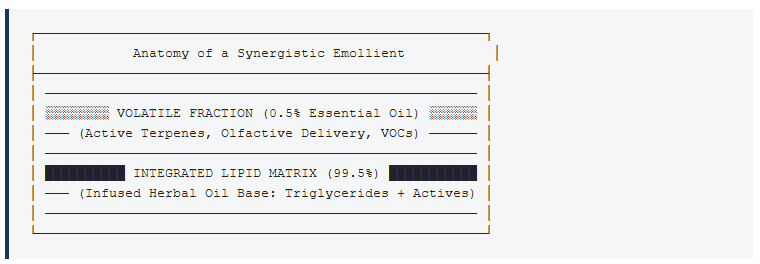
Combining herbal oils with essential oils is an effective formulation technique that blends the barrier-repairing benefits of a lipid base with the targeted active performance of volatile compounds.
The Carrier-Solvent Dynamics
Infused herbal oils serve as an excellent lipid base for essential oils. Because essential oils are highly lipophilic, they dissolve easily within the triglyceride structure of an infused oil. This distribution dilutes the concentrated volatile compounds, reducing their localized vapor pressure and slowing down their evaporation rate. This slower release ensures a more sustained delivery of the volatile components to the skin.
Optimizing the Sensory and Structural Profile
Formulating with both ingredient types allows you to fine-tune how a product feels on the skin. The infused herbal oil provides initial slip and emollient cushion, while the low-viscosity volatile compounds help lower the overall surface tension of the lipid phase. This combination improves spreadability and reduces the heavy, greasy after-feel often associated with pure fixed carrier oils.
Consumer Perception and Marketing Alignment
Using this combination supports clear product positioning for both clean beauty and technical performance. The infused herbal oil establishes a base of traditional botanical ingredients, while the pure essential oil provides a natural, functional fragrance. This eliminates the need for synthetic perfumes while supporting authentic, plant-based product claims.
Formulation Perspective: Rheology, Stability, and Processing
Integrating complex botanical lipids into commercial topical preparations requires careful control of temperature, oxidation kinetics, and interfacial chemistry.
Controlling Oxidative Rancidity
The shelf life of a botanical formulation depends heavily on the lipid stabilization strategy. Infused herbal oils carry a mix of unsaturated fatty acids that are vulnerable to autoxidation via free radical pathways. Essential oils, especially those rich in monoterpenes like citrus oils, are also prone to rapid oxidation that can form irritating hydroperoxides.
- Antioxidant Strategy: You must include a reliable antioxidant system. Combining Tocopherol (Mixed Isomers) at 0.2% to 0.5% with Rosemary Leaf Extract (CO2 Total) at 0.05% to 0.1% provides excellent protection. This combination stops free-radical chain reactions in both the carrier lipid and the volatile terpene phases.
- Processing Temperature Parameters: Essential oils are highly volatile and thermolabile. Introducing them to a batch at elevated temperatures causes immediate flash-off of key top-note monoterpenes, altering both the scent profile and the active performance. Always add essential oils during the cool-down phase of emulsification, specifically below 40°C. Infused herbal oils can handle moderate heat, but prolonged exposure to high temperatures should be avoided to prevent thermal degradation of sensitive botanical components.
Emulsification Strategies and Hydrophilic-Lipophilic Balance (HLB)
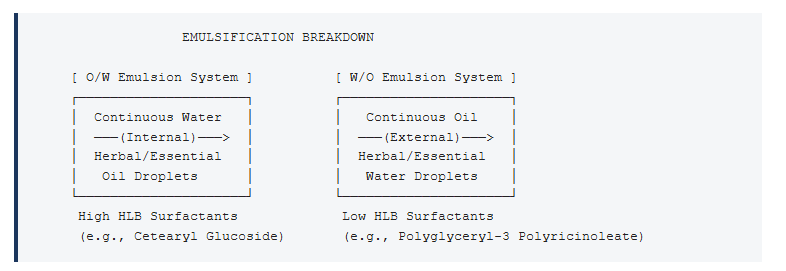
Incorporating complex botanical oils into oil-in-water (O/W) or water-in-oil (W/O) emulsions requires a careful evaluation of the total required HLB of the lipid phase.
Where Φ_i represents the mass fraction of the individual lipid component relative to the total oil phase.
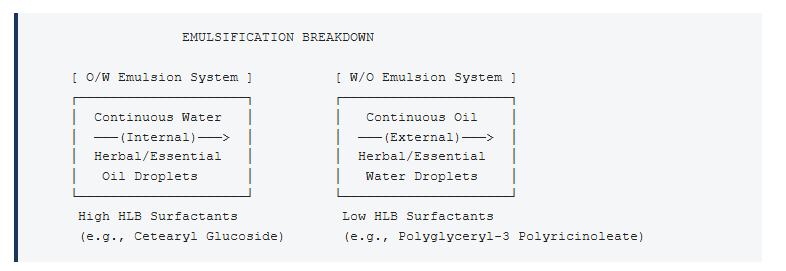
Infused herbal oils generally have a required HLB between 7.0 and 8.0 depending on their carrier base (such as soybean or sunflower oil). Essential oils are more polar and have a higher required HLB, often ranging from 12.0 to 14.0. Failing to account for this difference when adding essential oils to an emulsion can destabilize the interfacial film, leading to oil separation or creaming over time.
Preservation Systems and Interfacial Chemistry
The introduction of unrefined or organic-infused herbal oils can bring trace organic matter or micro-moisture into a formula, which can challenge standard preservation systems. In contrast, essential oils can help inhibit microbial growth. When formulating water-containing creams or lotions, ensure your preservation strategy remains effective by combining organic acids (such as Sodium Benzoate or Potassium Sorbate) with booster glycols (such as Caprylyl Glycol or Ethylhexylglycerin). This combination helps protect the formulation across both the water and oil phases.
Commercial Perspective: Scaling, Sourcing, and SCM Economics
From a procurement and supply chain management (SCM) perspective, choosing between a herbal oil vs essential oil involves weighing initial raw material costs against long-term manufacturing scalability.
Cost Optimization and COGS Projections
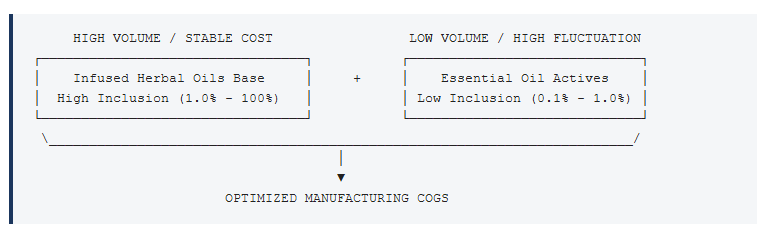
The financial structures of these two ingredient categories are vastly different. Infused herbal oils use more affordable carrier lipid bases, making them cost-effective options that can serve as the primary volume of a formulation. This allows brands to maintain stable raw material costs even at large production volumes.
Pure essential oils are high-cost specialties with prices that fluctuate based on crop yields, weather patterns, and regional distillation outputs. However, because they are used at low percentages (often under 1%), their impact on the overall cost per unit remains manageable. Procurement teams must balance these factors carefully when budgeting for high-volume contract manufacturing.
Minimum Order Quantities (MOQs) and Global Supply Chain Stability
An experienced essential oil manufacturer typically requires specific MOQs for rare distillates due to the large amount of raw plant material needed for extraction. Infused herbal oils are generally easier to scale because their carrier oils are readily available year-round. Working with an integrated OEM cosmetic manufacturer like A.G. Organica Pvt. Ltd. helps streamline this process, ensuring consistent access to high-quality ingredients and reliable batch scaling.
Technical Export Documentation
Shipping botanical cosmetics internationally requires a comprehensive documentation package. Every ingredient must be fully traceable to pass regulatory inspections and clear customs smoothly.
- For Infused Oils: Requires accurate technical datasheets detailing the carrier lipid profile, extraction methods, and pesticide residue analyses.
- For Essential Oils: Requires complete Gas Chromatography-Mass Spectrometry (GC-MS) profiles to confirm purity, along with dedicated safety data sheets detailing volatile handling precautions.
Regulatory Perspective: Compliance, Safety, and Global Standards
Navigating global regulatory systems requires a clear understanding of the safety profiles and compliance frameworks that govern botanical ingredients.
IFRA Standards and Dermal Sensitization Limits
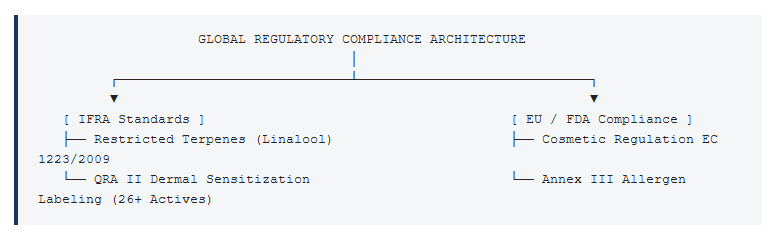
The International Fragrance Association (IFRA) sets strict limits on volatile organic compounds to protect consumers from dermal irritation and sensitization. Essential oils rich in molecules like safrole, methyleugenol, or citral face clear restriction limits based on the final product category (such as leave-on face creams versus rinse-off shampoos) under IFRA's Quantitative Risk Assessment (QRA II) framework. Infused herbal oils are rarely limited by IFRA standards unless the carrier oil itself has specific usage restrictions.
Global Cosmetic Regulations (EU, FDA, and MoHFW)
Under European Union Regulation (EC) No 1223/2009, any cosmetic formulation containing essential oils must explicitly declare individual volatile allergens on the product label if they exceed 0.001% in leave-on products or 0.01% in rinse-off products. These common allergens include:
- Linalool
- Limonene
- Geraniol
- Citronellol
The FDA maintains similar transparency expectations, requiring comprehensive safety data to back up any performance or structural claims made for botanical ingredients.
Manufacturing Quality Standards (GMP and ISO)
To ensure production quality matches formulation design, manufacturing must follow strict international standards. Processing should occur within facilities certified under ISO 22716:2007 (Cosmetic GMP). This environment ensures precise control over cross-contamination, accurate temperature monitoring during the addition of volatile phases, and reliable batch-to-batch consistency for both infused and distilled ingredients.
Common Formulation Mistakes to Avoid
- Overdosing Essential Oils for Fragrance Purposes: Relying solely on essential oils to mask strong base odors often leads to skin irritation or formula instability. When high scent intensity is required, use a balanced combination of targeted essential oils and specialized natural isolates while staying within safe dermal limits.
- Using Highly Unsaturated Infused Bases in Hot-Process Emulsions: Introducing a herbal oil with high levels of polyunsaturated fatty acids (such as flaxseed or evening primrose infusions) directly into a hot water phase causes rapid lipid degradation. Always add sensitive oils during the cool-down phase to preserve their structural integrity.
- Neglecting Headspace Oxidation in Storage Vessels: Storing bulk quantities of completed botanical formulations in half-empty containers accelerates oxidation due to air exposure. Use inert gas flushing (such as nitrogen purging) or switch to variable-capacity stainless steel tanks to maintain product stability during storage.
- Omitting Volatile Allergen Declarations on Labels: Omitting regulatory allergen breakdowns for essential oils can lead to compliance issues during international audits. Always secure a detailed allergen breakdown from your essential oil manufacturer to ensure correct label transparency.
Current Industry Trends Driving Botanical Formulation
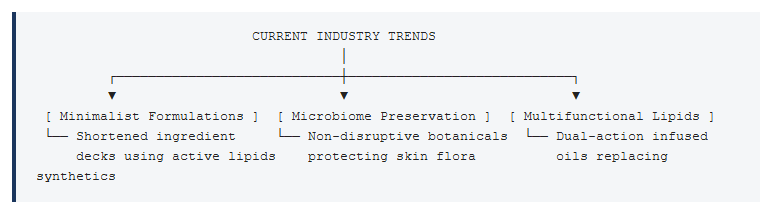
Modern product development is heavily influenced by clean beauty, simplified ingredient decks, and multi-functional performance.
Minimalist Formulations and Reduced Ingredient Decks
Indie beauty and premium luxury brands are moving toward shorter, more intentional ingredient lists. Instead of using a synthetic emollient alongside a separate active extract and a synthetic fragrance, formulators are choosing multi-functional botanical ingredients. For example, an infused herbal oil can provide the base texture while naturally carrying functional essential oil components, delivering performance and aroma within a simpler formula.
Supporting and Protecting the Skin Microbiome
Consumers are increasingly seeking gentle products that protect the skin's natural flora. Concentrated essential oils can sometimes exhibit strong antimicrobial action that disrupts beneficial skin microbes if used incorrectly. Combining them with skin-compatible infused herbal oils helps deliver targeted benefits while maintaining a healthy skin barrier and microbiome environment.
The Growth of Private Label and Contract Manufacturing
The private label market is expanding rapidly, driving demand for ready-to-scale, professionally validated botanical formulations. Brands can reduce development timelines by partnering with an established OEM cosmetic manufacturer like A.G. Organica Pvt. Ltd., utilizing pre-tested, stable bases that blend high-performance infused lipids with optimized volatile essential oils.
Decision Framework for Brand Owners and Formulators
Use this strategic decision matrix to select the ideal oil vehicle for your specific product type and performance goals.
Application Selection Matrix
| If Your Product Goal Is... | Primary Selection | Secondary Support / Synergy | Rationale |
|---|---|---|---|
| Premium Anti-Aging Facial Serum | Infused Herbal Oil Base (e.g., Rosehip/Gotu Kola) | 0.2%–0.5% Active Essential Oil (e.g., Helichrysum or Neroli) | Combines targeted skin penetration with deep lipid barrier support. |
| Therapeutic Sports Massage Oil | Infused Herbal Oil Base (e.g., Arnica-infused Sesame/Sunflower) | 1.0% Pain-Relief Essential Oils (e.g., Wintergreen or Peppermint) | Provides excellent long-lasting slip while delivering comforting, cooling sensations. |
| Targeted Hair Growth Treatment | Infused Herbal Oil Base (e.g., Bhringraj/Amla in Sesame Oil) | 0.5% Stimulating Essential Oils (e.g., Rosemary or Cedarwood) | Delivers deep nourishment to hair cuticles while gently stimulating the scalp. |
| Soothing Baby Balancing Lotion | Soothing Infused Herbal Oil (e.g., Calendula-infused Jojoba) | Avoid Essential Oils (or keep under 0.05% Lavender) | Prioritizes complete skin safety and avoids volatile allergens for delicate skin. |
| Moisturizing Conditioning Beard Oil | Lightweight Infused Herbal Oil (e.g., Moringa or Argan infusion) | 0.5%–1.0% Woody Essential Oils (e.g., Sandalwood or Cedarwood) | Offers smooth grooming control alongside a clean, completely natural fragrance profile. |
| True Aromatherapy Wellness Roll-On | Light Carrier Base (e.g., Caprylic/Capric Triglycerides) | 3.0%–5.0% Concentrated Essential Oil Blends | Focuses on high volatility to ensure effective aromatic delivery and inhalation benefits. |
Frequently Asked Questions
What is the primary difference between herbal oils and essential oils?
The main difference lies in their chemical composition and extraction methods. Herbal oils are non-volatile oils created by soaking plant material in a carrier lipid to extract fat-soluble components. Essential oils are highly concentrated, volatile liquids isolated through steam distillation or expression, containing only the volatile secondary metabolites of the plant.
Can essential oils be applied directly to the skin?
Applying pure essential oils directly to the skin is generally not recommended due to their high concentration, which can cause chemical burns, sensitization, or severe contact dermatitis. They should be diluted within a suitable carrier lipid or infused herbal oil matrix before topical application.
Which oil type offers better oxidative stability in cosmetics?
Infused herbal oils usually offer more predictable oxidative stability, though this depends heavily on the specific carrier oil used (for example, jojoba oil is highly stable, while flaxseed oil oxidizes quickly). Essential oils can oxidize rapidly when exposed to air and light, requiring the addition of reliable antioxidants like tocopherol to maintain stability.
How do procurement costs compare between these two ingredients?
Infused herbal oils are typically more economical and stable in price because they rely on readily available carrier lipids. Pure essential oils carry higher upfront costs and their prices can fluctuate based on crop yields and agricultural conditions, though their low usage levels in final formulas helps balance overall production costs.
Which option is better suited for baby care products?
Infused herbal oils (such as Calendula or Chamomile infused in jojoba or sweet almond oil) are much better suited for baby care. They deliver soothing emollient benefits without the volatile allergens found in essential oils, which can easily irritate a baby's delicate skin barrier.
Can both ingredient types be listed together on a clean beauty label?
Yes, combining them is a common practice in clean beauty formulation. The infused herbal oil is often listed by its carrier and extract names (e.g., Helianthus Annuus Seed Oil, Centella Asiatica Extract), while the essential oil is listed by its specific botanical distillate name (e.g., Rosmarinus Officinalis Leaf Oil), providing a clear and transparent ingredient deck.
Strategic Formulation Takeaway
Optimizing product performance requires treating botanical ingredients as precise chemical systems rather than simple marketing additions. Infused herbal oils provide the reliable lipid structure, deep emollient cushion, and essential fatty acids needed to restore the skin barrier. Essential oils deliver low-dosage active performance, natural functional fragrance, and targeted penetration enhancement.
Developing a stable, scalable product means matching the unique physical properties of these oils to your specific product architecture, processing temperatures, and required HLB values. Partnering with an experienced, technically proficient manufacturing expert like A.G. Organica Pvt. Ltd. ensures your formulations maintain high stability, regulatory compliance, and performance from initial laboratory scale to final commercial production.