
Difference Across EU, USA & Middle East Beauty Market

Did you know that a cosmetic product perfectly legal and beloved in Europe might be completely banned in the United States, or vice-versa? It’s a startling reality for beauty brands aiming for international expansion. The global beauty market, valued at a staggering $571.1 billion in 2023, is a tantalizing opportunity, but its diverse regulatory frameworks present a significant challenge. Understanding these regulatory differences across EU, USA & Middle East beauty markets is not just important; it's crucial for market entry, product development, and sustained success.
This comprehensive guide will demystify the complex web of regulations governing cosmetics in these three powerhouse regions. We’ll delve into the core principles, highlight key distinctions, and provide actionable insights for brands seeking to conquer these diverse markets. Whether you're a budding entrepreneur or an established player, mastering these nuances will be your secret weapon.
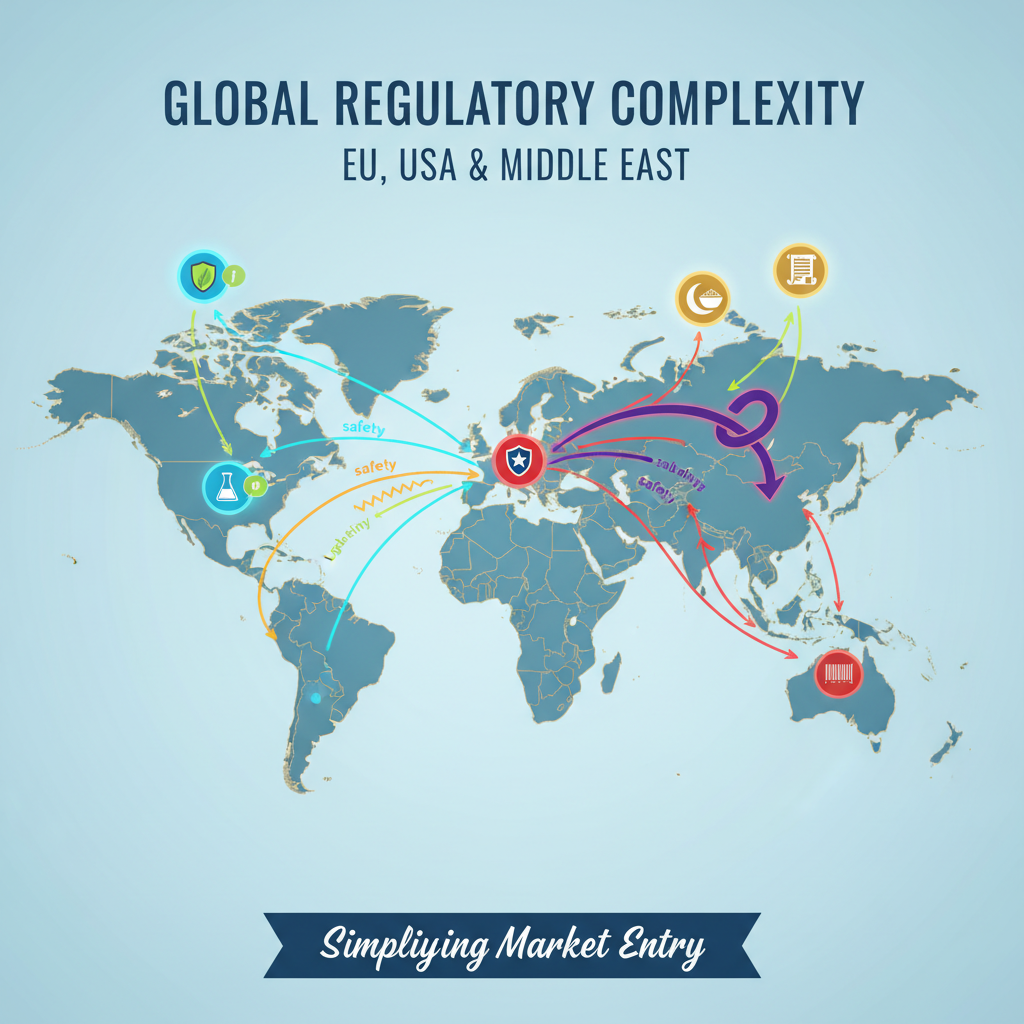
The Pillars of Cosmetic Regulation: A Global Overview
Before diving into specifics, let’s establish a foundational understanding of what cosmetic regulations typically aim to achieve. At their core, these rules are designed to ensure consumer safety and prevent misleading claims. However, the how and what of achieving these goals vary dramatically.
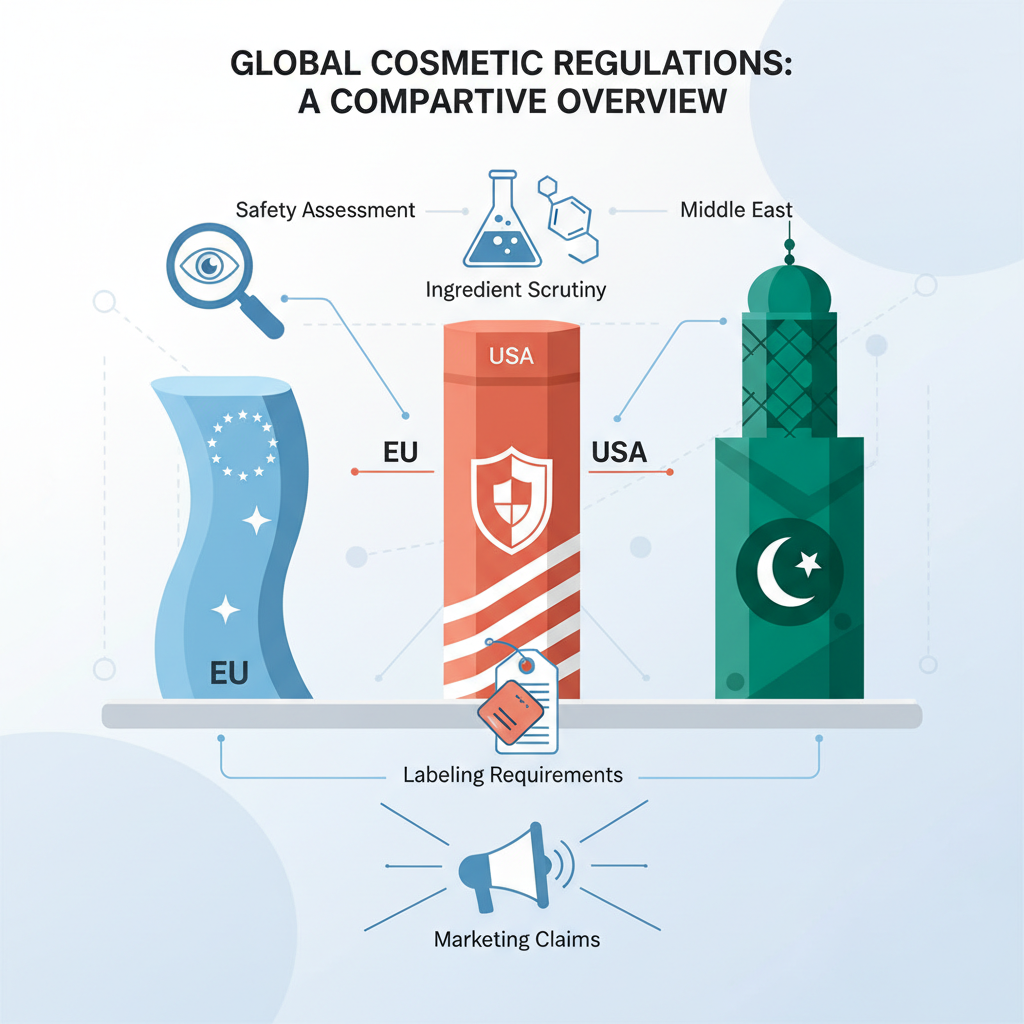
- Safety Assessment: Ensuring products are safe for intended use, often requiring rigorous testing and documentation.
- Ingredient Scrutiny: Controlling or banning certain ingredients due to potential health risks.
- Labeling Requirements: Mandating clear and accurate information for consumers, including ingredient lists, warnings, and usage instructions.
- Marketing Claims: Regulating how product benefits and efficacy are communicated to avoid deception.
- Good Manufacturing Practices (GMP): Ensuring products are produced consistently and controlled according to quality standards.
European Union: The Precautionary Principle and Robust Oversight
The European Union operates under a highly structured and precautionary approach to cosmetic regulation. The cornerstone is Regulation (EC) No 1223/2009, which harmonizes rules across all 27 member states. This regulation is renowned for its stringent requirements and its commitment to consumer protection.
Key Features of EU Cosmetic Regulation:
- Centralized Notification: Products must be notified through the Cosmetic Products Notification Portal (CPNP) before being placed on the market. This system acts as a central database for authorities.
- Product Information File (PIF): A comprehensive PIF must be maintained for each product. This includes detailed information on the product's composition, manufacturing process, safety assessment, and labeling.
- Safety Assessor: A qualified safety assessor must conduct a thorough safety assessment for every cosmetic product. This is a critical step and requires specific expertise.
- Prohibited and Restricted Substances: The EU has a comprehensive list of prohibited substances (Annex II) and restricted substances (Annex III) in cosmetics. These lists are regularly updated based on scientific evidence.
- Claims Substantiation: Marketing claims must be substantiated and comply with the Commission Regulation (EU) No 655/2013 on common criteria for the justification of claims. Claims cannot imply that the product treats or cures diseases.
- No Pre-Market Approval (Generally): While there's no overarching pre-market approval for every product, the rigorous PIF and safety assessment process, coupled with CPNP notification, creates a significant barrier to entry and ensures thorough vetting.
- Animal Testing Ban: The EU has one of the most comprehensive bans on animal testing for cosmetic products and their ingredients, extending to finished products placed on the market and ingredients sold within the EU. This is a significant ethical and regulatory differentiator. Brands often look to ethically sourced ingredients, such as those found on pureoilsindia.com for their formulations.
Challenges in the EU Market:
- Complexity of PIF: Compiling and maintaining the PIF can be resource-intensive.
- Evolving Regulations: Staying abreast of updates to Annexes II and III and other regulatory changes requires constant vigilance.
- Language Requirements: Labeling and safety information must be available in the official language(s) of the member state where the product is sold.
United States: A Market-Driven Approach with FDA Oversight
The U.S. cosmetic market operates under a different philosophy, primarily governed by the Federal Food, Drug, and Cosmetic Act (FD&C Act) and enforced by the Food and Drug Administration (FDA). The U.S. system is generally considered more market-driven, with less pre-market oversight compared to the EU.
Key Features of US Cosmetic Regulation:
- No Pre-Market Approval: Unlike pharmaceuticals or medical devices, cosmetic products and their ingredients (with the exception of color additives) do not require FDA pre-market approval before they can be sold.
- Manufacturer Responsibility: The primary responsibility for ensuring product safety lies with the manufacturer or marketer. They must have adequate data to support the safety of their products.
- Adulteration and Misbranding: The FDA's authority focuses on preventing adulterated (unsafe) or misbranded (misleadingly labeled) products from entering the market. They can take action after a product is on the market.
- Ingredient Disclosure: While not as prescriptive as the EU’s INCI system, ingredient declaration is required on the label in descending order of predominance. The Modernization of Cosmetics Regulation Act of 2022 (MoCRA) has significantly strengthened FDA oversight.
- MoCRA's Impact: MoCRA introduces several new requirements, including mandatory facility registration, product listing, safety substantiation, mandatory adverse event reporting, and specific labeling requirements for professional use products.
- Prohibited Ingredients: The FDA maintains a list of prohibited ingredients, though it is less extensive than the EU’s lists.
- Color Additives: All color additives used in cosmetics must be approved by the FDA for their intended use and listed in the regulations.
- Claims Substantiation: Claims must be truthful and not misleading. The FDA can take action against products making drug claims (e.g., claiming to treat acne or wrinkles) without meeting drug requirements. This is a critical distinction from cosmetic claims.
Challenges in the US Market:
- Post-Market Enforcement: The reliance on post-market enforcement means brands must be exceptionally diligent in ensuring safety and accurate labeling from the outset.
- Evolving Landscape with MoCRA: MoCRA represents a significant shift, requiring brands to adapt to new registration, listing, and reporting obligations.
- Drug vs. Cosmetic Claims: Navigating the fine line between cosmetic and drug claims is a common challenge. For instance, while a product can claim to reduce the appearance of wrinkles, claiming to treat wrinkles would classify it as a drug.
Middle East: A Patchwork of Regulations with Growing Harmonization
The Middle East presents a more fragmented regulatory landscape, with each country often having its own specific requirements. However, there's a growing trend towards harmonization, particularly within the Gulf Cooperation Council (GCC) countries (Saudi Arabia, UAE, Kuwait, Qatar, Bahrain, Oman).
Key Features of Middle Eastern Cosmetic Regulation:
- GCC Harmonization: The GCC Technical Regulation for Cosmetics (GSO 2273:2016) aims to standardize cosmetic product requirements across member states. This is a significant step towards simplifying market access.
- Product Registration: Many countries, especially within the GCC, require product registration with their respective health authorities before market entry. This often involves submitting detailed product dossiers.
- Halal Certification: For markets with significant Muslim populations, Halal certification is often a crucial requirement or a strong market differentiator. This ensures products comply with Islamic dietary and ethical laws, particularly regarding ingredients and manufacturing processes. Sourcing ingredients that are Halal-certified is becoming increasingly important.
- Ingredient Restrictions: Similar to the EU and USA, specific ingredients are restricted or prohibited. The GCC regulation often aligns with EU lists but may have country-specific nuances.
- Labeling: Labeling requirements generally align with international standards, including ingredient declaration (often INCI) and country of origin. However, specific language requirements (e.g., Arabic) may apply.
- No Animal Testing: Most GCC countries have adopted stances against animal testing for cosmetics, aligning with global trends.
- Claims Substantiation: Claims must be truthful and not misleading, with specific attention paid to avoiding drug claims.
Challenges in the Middle East Market:
- Country-Specific Variations: Despite GCC harmonization, individual countries may still have unique import procedures, documentation requirements, or interpretation of regulations.
- Halal Certification Complexity: Obtaining credible Halal certification can be a complex and time-consuming process, requiring specific accreditation bodies.
- Navigating Local Authorities: Dealing with multiple government agencies and varying bureaucratic processes can be challenging.
- Cultural Sensitivity: Beyond regulations, understanding cultural nuances in marketing and product presentation is vital for success.
Comparative Analysis: Key Differences at a Glance
To solidify understanding, let's compare the core regulatory philosophies and requirements:
|
Feature |
European Union (EU) |
United States (USA) |
Middle East (GCC Focus) |
|
Primary Oversight |
Precautionary, centralized, detailed PIF |
Market-driven, post-market enforcement, manufacturer-led |
Harmonized (GCC), country-specific, product registration |
|
Safety Assessment |
Mandatory, conducted by qualified safety assessor |
Manufacturer responsibility, supported by data (MoCRA now mandates substantiation) |
Manufacturer responsibility, often requires dossier submission for registration |
|
Pre-Market Approval |
No general approval, but rigorous notification/PIF |
No pre-market approval (except color additives) |
Often requires product registration |
|
Ingredient Control |
Extensive lists of prohibited/restricted (Annexes) |
Limited prohibited list, focus on safety substantiation |
Aligns with EU/international standards, country variations |
|
Animal Testing |
Comprehensive ban |
No federal ban, but industry trend and MoCRA considerations |
Generally banned |
|
Claims |
Strict substantiation, no disease treatment claims |
Truthful, not misleading, strict drug vs. cosmetic distinction |
Truthful, not misleading, avoid drug claims |
|
Notification/Listing |
CPNP notification |
Facility registration & product listing (MoCRA) |
Product registration with health authorities |
Strategies for Success in Global Beauty Markets
Navigating these diverse regulatory landscapes requires a strategic and informed approach. Here are key strategies for beauty brands:
- Invest in Regulatory Expertise: Partner with regulatory consultants or in-house experts who specialize in the target markets. Their knowledge is invaluable.
- Prioritize Safety Substantiation: Regardless of the region, robust safety data is paramount. Invest in thorough testing and documentation.
- Understand Ingredient Restrictions: Meticulously check ingredient lists against the prohibited and restricted substances for each target market. Consider sourcing from reputable suppliers like pureoilsindia.com for high-quality, compliant ingredients.
- Master Labeling and Claims: Ensure all labeling complies with local language and content requirements. Claims must be truthful, substantiated, and carefully worded to avoid crossing into drug territory.
- Plan for Registration and Notification: Factor in the time and resources required for product registration (Middle East) or notification (EU) and listing (USA under MoCRA).
- Embrace Ethical Sourcing and Testing: With growing global demand for ethical products, adhering to animal testing bans and seeking Halal certification where relevant can be significant market advantages.
- Stay Updated: Regulations are not static. Continuously monitor updates and changes in the target markets.
Conclusion: Harmonization of Hope and Persistent Differences
The global beauty industry is increasingly interconnected, and with that comes a desire for harmonization. While regions like the GCC are making strides in aligning their regulations, significant differences persist between major markets like the EU and the USA. The EU's precautionary, pre-emptive approach, the USA's market-driven oversight (now bolstered by MoCRA), and the Middle East's developing framework each present unique hurdles and opportunities.
For beauty brands, success hinges on a deep understanding of these regulatory differences across EU, USA & Middle East beauty markets. It requires meticulous planning, investment in expertise, and a commitment to consumer safety and transparent communication. By proactively addressing these regulatory complexities, brands can unlock the immense potential of these vibrant global markets, ensuring their products not only meet but exceed expectations, fostering trust and driving sustainable growth.
- Bulk Essential Oil Suppliers for Canada
- Essential Oil Suppliers for Japan
- Essential Oils Manufacturer - European Union
- Private Label Essential Oils for ASEAN
- Essential Oils Bulk Supplier Malaysia, Indonesia, Singapore
- Bulk Essential Oil Supplier for Europe
- Middle East Brands Source Essential Oils from India
- Essential Oils Supplier for Middle East
- Essential Oils in South American
- Essential Oil Exporters in the Middle East
- Top Essential Oil Suppliers UK
- Regional Wholesale Demand Essential Oils USA
- Biggest Exporter of Essential Oils
Frequently Asked Questions (FAQs)
-
Q: Is it true that a product approved in the EU is automatically approved in the USA?
A: Absolutely not. The regulatory systems are fundamentally different. The EU has a more pre-emptive approach with detailed safety assessments and notifications, while the USA relies more on post-market enforcement by the FDA, with manufacturers holding primary responsibility for safety substantiation. Even with MoCRA, pre-market approval is not the standard for cosmetics.
-
Q: What is the most significant challenge when entering the Middle Eastern beauty market?
A: While regulations are harmonizing within the GCC, the most significant challenges often involve navigating country-specific import procedures, obtaining necessary product registrations with local health authorities, and addressing the crucial aspect of Halal certification, which can be complex and time-consuming.
-
Q: How does the US FDA regulate cosmetic ingredients?
A: The FDA does not pre-approve cosmetic ingredients, except for color additives. Instead, they regulate ingredients under the FD&C Act, focusing on preventing adulterated or misbranded products. Manufacturers are responsible for ensuring the safety of their ingredients and finished products. MoCRA has introduced mandatory safety substantiation requirements.
-
Q: Does the EU ban all animal testing for cosmetics?
A: Yes, the EU has a comprehensive ban on the marketing of cosmetic products and their ingredients that have been tested on animals. This ban covers finished products as well as ingredients, and it extends to products sold within the EU market, reflecting a strong commitment to animal welfare.
-
Q: Are there specific language requirements for cosmetic product labels in the EU?
A: Yes. While the core safety information and ingredient list (typically in INCI format) are standardized, Member States may require certain information, such as warnings or directions for use, to be provided in their official language(s). This ensures consumers in each country can fully understand product usage and safety information.
Key Takeaways
- EU: Emphasizes a precautionary principle, detailed Product Information Files (PIFs), mandatory safety assessments by qualified assessors, and a comprehensive list of prohibited/restricted substances. A strong animal testing ban is in place.
- USA: Operates on a market-driven approach with FDA oversight focused on post-market enforcement. Manufacturers are responsible for safety. The MoCRA legislation has significantly enhanced FDA authority with new registration, listing, and reporting requirements.
- Middle East: Characterized by growing GCC harmonization but still involves country-specific nuances. Product registration and Halal certification are often critical requirements.
- Key Differences: Lie in the level of pre-market scrutiny, the scope of ingredient control, and the mechanisms for ensuring safety and compliance.
- Global Strategy: Success requires dedicated regulatory expertise, robust safety substantiation, meticulous attention to labeling and claims, and proactive adaptation to evolving regulations. Exploring ethical and compliant ingredient suppliers is also crucial.
Sources:
- European Commission – Cosmetics: https://ec.europa.eu/growth/sectors/cosmetics_en
- U.S. Food and Drug Administration – Cosmetics: https://www.fda.gov/cosmetics
- Gulf Standardization Organization (GSO): https://www.gso.org.sa/
- Cosmetics Europe: https://cosmeticseurope.eu/