
Best Essential Oil for Hives

If you have ever woken up with itchy, red bumps on your skin, you know how frustrating hives can be. They often appear out of nowhere. One minute your skin is fine, and the next, you are covered in raised welts that itch intensely.
Hives can make it hard to focus on work or get a good night's sleep. While there are many ways to handle skin irritation, many people are looking for natural ways to calm their skin. Essential oils are a popular choice for this.
In this guide, we will talk about how certain essential oils might help soothe the discomfort of hives. We will look at which oils are best, how to use them safely, and when it is time to put the oils away and see a doctor.
It is important to remember that while essential oils can be very helpful for cooling and calming the skin, they are not a "magic cure." They are a tool to help you feel more comfortable while your body heals.
What Are Hives?
Hives, which doctors sometimes call "urticaria," are red, itchy bumps or patches on the skin. They can be small, like a mosquito bite, or large, like a dinner plate. Sometimes, many small hives join together to form one big area of swelling.
- What do they look like? Hives are usually raised above the rest of the skin. They often have a clear edge. If you press the center of a red hive, it might turn white for a moment. This is called "blanching."
- How do they feel? The main symptom of hives is itching. For some people, the itch is mild. For others, it can feel like a stinging or burning sensation. The skin in that area might also feel warm to the touch.
- How long do they last? Hives are strange because they can move around. A bump might appear on your arm, disappear after a few hours, and then a new one might show up on your leg. Most cases of hives go away within a few days, but some people deal with them for longer.
Common Causes of Hives
Hives happen when your body releases a chemical called histamine into your skin. This usually happens because your immune system thinks something is attacking you. Here are some of the most common reasons people get hives:
- Food Allergies: Certain foods are common triggers. These include nuts, shellfish, eggs, and berries. Even if you have eaten these foods before without a problem, your body can sometimes develop a reaction later in life.
- Insect Stings and Bites: A bee sting or a bite from a specific type of spider or ant can cause hives. Sometimes the hives stay near the bite, and sometimes they spread across the whole body.
- Stress: Our minds and skin are closely linked. When you are under a lot of pressure at work or home, your body can react physically. Stress hives are very common and can be just as itchy as an allergic reaction.
- Weather and Temperature: Some people get hives when they get too cold or too hot. Even sweating during a workout or taking a very hot shower can trigger a breakout for some individuals.
- Skincare or Chemicals: Using a new laundry soap, a new perfume, or a strong cleaning chemical can irritate the skin. If your skin doesn't like a specific ingredient, it might react by breaking out in hives.
Can Essential Oils Help with Hives?
Essential oils are highly concentrated liquids taken from plants. They carry the "essence" of the plant, including its scent and its natural properties.
- What Essential Oils Can Do - Essential oils can be very good at cooling the skin. Many of them have properties that help reduce the feeling of heat and itchiness. When used correctly, they can provide a sense of relief and help you stop scratching, which prevents the hives from getting worse.
- What Essential Oils Cannot Do - It is vital to be honest here: essential oils are not a replacement for medical treatment if you are having a serious allergic reaction. They do not "cure" the underlying allergy. They are meant for topical relief—meaning they help the surface of the skin feel better.
The Importance of Dilution - You should never put a pure essential oil directly onto hives. Because hives are already a sign of irritated skin, putting a strong oil on them could make the reaction much worse. You must always mix them with a "carrier oil" like coconut or almond oil.
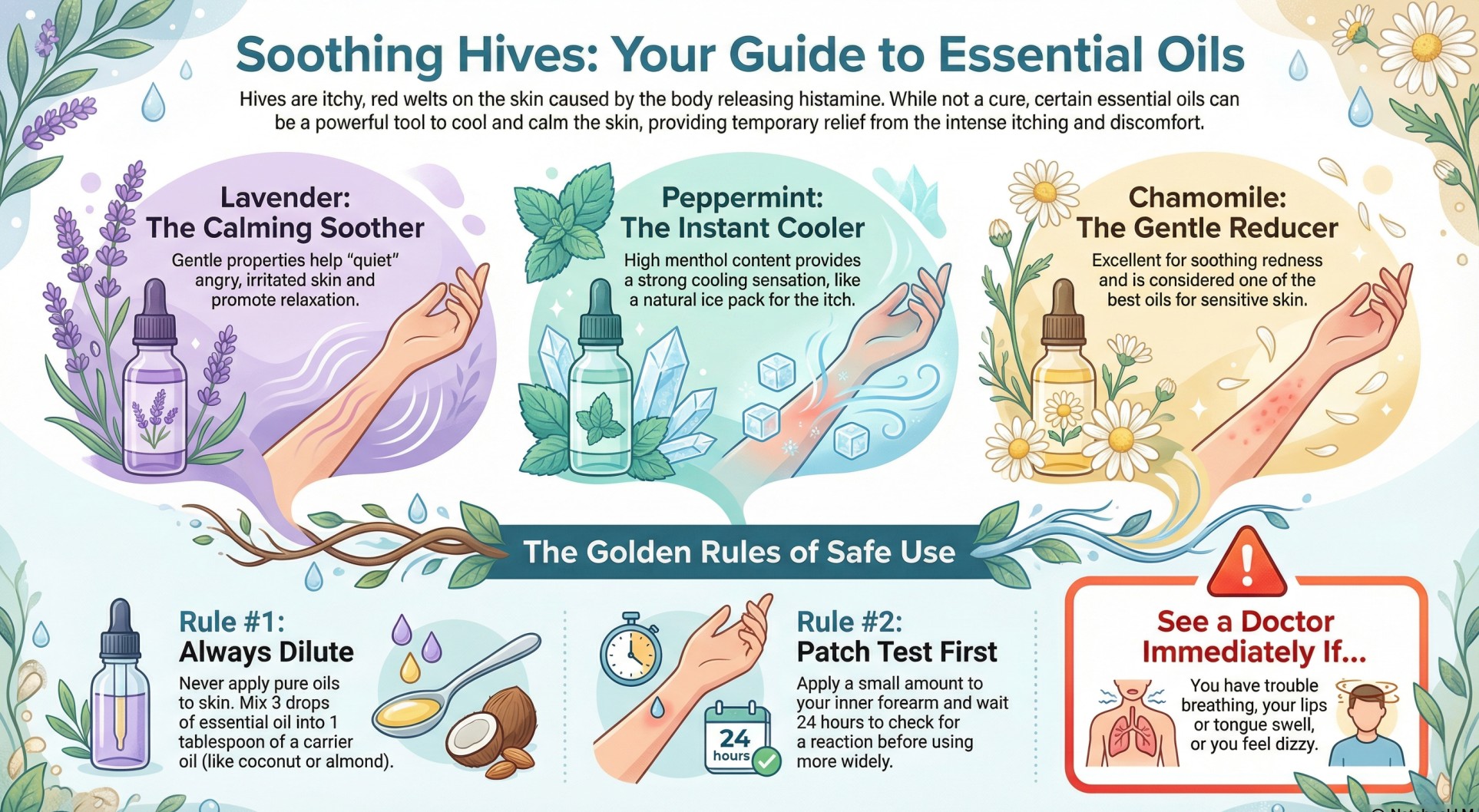
Best Essential Oils for Hives
There are many essential oils out there, but a few stand out when it comes to skin comfort. Here are the top choices.
-
Lavender Essential Oil: Lavender is perhaps the most famous essential oil in the world. It is known for its calming scent, but it is also wonderful for the skin.
- Why it helps: Lavender is very gentle. It has properties that help "quiet" the skin. When hives feel angry and red, lavender can help them feel less irritated.
- How to use it: Many people find that a few drops of lavender in a carrier oil helps them relax enough to sleep even when their skin is itchy.
- Safety note: Lavender is generally very safe, but always check for purity.
-
Tea Tree Essential Oil: Tea tree oil comes from a plant in Australia. It is often used for oily skin or acne, but it can be helpful for hives too.
- Why it helps: It has a cooling effect and helps keep the skin clean. If you have been scratching your hives, tea tree can help protect the skin from further irritation.
- How to use it: Use it very sparingly. It is quite strong, so you only need a tiny amount mixed into a carrier oil.
- Safety note: Some people find tea tree oil a bit drying, so make sure to use a moisturizing carrier oil with it.
-
Chamomile Essential Oil: Just like chamomile tea helps you relax before bed, the oil from the chamomile flower helps relax the skin.
- Why it helps: There are two main types: Roman Chamomile and German Chamomile. Both are excellent for soothing redness. It is often considered one of the best oils for people with sensitive skin.
- How to use it: It works well as a "spot treatment" when mixed with a carrier oil and dabbed onto the specific welts.
- Safety note: If you are allergic to ragweed, you should be careful with chamomile, as they are in the same plant family.
-
Peppermint Essential Oil: Peppermint oil is famous for its high menthol content. This gives it a very strong cooling sensation.
- Why it helps: When hives feel like they are burning or "on fire," the cooling power of peppermint can provide instant relief. It acts like a natural ice pack for the itch.
- How to use it: Use a very low dilution (only 1 drop per tablespoon of carrier oil) because it is very powerful.
- Safety note: Do not use peppermint oil on very young children or near the face, as the strong vapors can be overwhelming.
-
Frankincense Essential Oil: Frankincense has been used for thousands of years. It is often called the "king of oils" because it is good for so many things.
- Why it helps: It is very supportive of skin health. It helps the skin stay strong and can reduce the appearance of redness.
- How to use it: It has a woody, earthy smell that is very grounding. It is great for stress-related hives.
- Safety note: It is a more expensive oil, so make sure you are buying from a reputable source to ensure it isn't diluted with cheaper synthetics.
Best Carrier Oils to Use with Essential Oils
A carrier oil is a plain vegetable-based oil that "carries" the essential oil onto your skin. It dilutes the strength so the essential oil doesn't cause a burn or a bad reaction.
- Coconut Oil: Coconut oil is a favorite because it is easy to find and very moisturizing. At room temperature, it is often a solid, but it melts as soon as it touches your skin. It creates a nice barrier that keeps moisture in.
- Sweet Almond Oil: This oil is very light and absorbs quickly. It contains Vitamin E, which is great for skin repair. It doesn't leave a very greasy feeling, which is nice if you need to put clothes on right after applying it.
- Jojoba Oil: Jojoba is technically a liquid wax, not an oil. It is very similar to the natural oils our own skin produces. This makes it very unlikely to cause any further irritation or clogged pores.
How to Use Essential Oils for Hives Safely
Using oils the right way is the difference between feeling better and feeling worse. Here is a simple guide on how to do it.
Step 1: The Dilution Rule - For an adult, a safe dilution is usually about 1% to 2%. This means:
- 1% Dilution: 3 drops of essential oil for every 1 tablespoon of carrier oil.
- 2% Dilution: 6 drops of essential oil for every 1 tablespoon of carrier oil.
When your skin is already upset with hives, start with the 1% dilution.
Step 2: The Patch Test - Before you put the mixture all over your hives, try it on a small, clear patch of skin—like your inner forearm. Wait for 24 hours. If there is no redness or itching in that spot, it is likely safe to use.
Step 3: Application - Gently dab the mixture onto the hives. Do not rub or scrub, as this can irritate the skin more and cause the hives to spread. You can apply this mixture 2 to 3 times a day.
What to Avoid
When you are dealing with hives, your skin is in a "high alert" state. You need to be extra careful.
- Never use "neat" oils: "Neat" means using the oil without a carrier. This is a common mistake and can lead to a chemical burn or a new allergy.
- Avoid broken skin: If you have scratched your hives so much that the skin is bleeding or raw, do not put essential oils on that spot.
- Don't mix too many types: Stick to one or two oils at a time. If you mix ten different oils and have a bad reaction, you won't know which one caused the problem.
- Avoid certain areas: Keep all essential oils away from your eyes, the inside of your nose, and other sensitive areas.
When to See a Doctor
Hives are usually harmless, but sometimes they are a sign of a medical emergency. You should stop using oils and seek help immediately if:
- You have trouble breathing or feel like your throat is closing.
- Your tongue or lips start to swell.
- You feel dizzy or faint.
- The hives cover your entire body very quickly.
- The hives last for more than a few days without getting better.
If you have "chronic hives" (hives that come back every day for weeks), you should see an allergist to find out the root cause.
Why Quality of Essential Oils Matters
Not all bottles of oil are the same. If you go to a bargain store and buy a cheap bottle of "Lavender Scented Oil," it might actually contain synthetic chemicals or perfumes. These chemicals are very likely to make hives worse.
To get the benefits of the plant, you need pure essential oils. This means the oil should be:
- Steam distilled or cold-pressed from the actual plant.
- Free from "fillers" or artificial scents.
- Tested to make sure it contains the right natural compounds.
This is where the source matters. A company like AG Organica focuses on being a responsible manufacturer and supplier. Because they work as a bulk manufacturer, they have to maintain high standards of testing and purity. When a company handles the process from the plant to the bottle, you can trust that there aren't hidden chemicals being added. Buying from a trusted supplier ensures that you aren't accidentally putting more triggers on your already sensitive skin.
Frequently Asked Questions (FAQs)
- Which essential oil works fastest for hives? Peppermint often provides the fastest "feeling" of relief because of its cooling menthol. However, Lavender is often the best for long-term calming throughout the day.
- Can essential oils stop the itching? They can definitely help dampen the itch. By cooling the skin and calming the nerves in the area, they make the itch much more manageable.
- Are essential oils safe for sensitive skin? Yes, if they are diluted properly. However, people with very sensitive skin should always choose gentle oils like Chamomile and do a patch test first.
- How long does it take to see relief? You usually feel the cooling effect within a few minutes. The redness may take a few hours to start fading as the skin relaxes.
Conclusion
Hives are a literal pain, but they don't have to ruin your week. By using natural tools like Lavender, Chamomile, or Peppermint essential oil, you can give your skin the support it needs to stay calm.
Just remember the golden rules:
- Always dilute with a carrier oil.
- Test a small spot before going all-in.
- Use high-quality oils from a source you trust, like AG Organica, to avoid nasty additives.
- Listen to your body and see a doctor if things get serious.
Take it slow, be gentle with your skin, and hopefully, those itchy bumps will be a thing of the past very soon.