
Aromatherapy Carrier Oil Market (2025–2032)
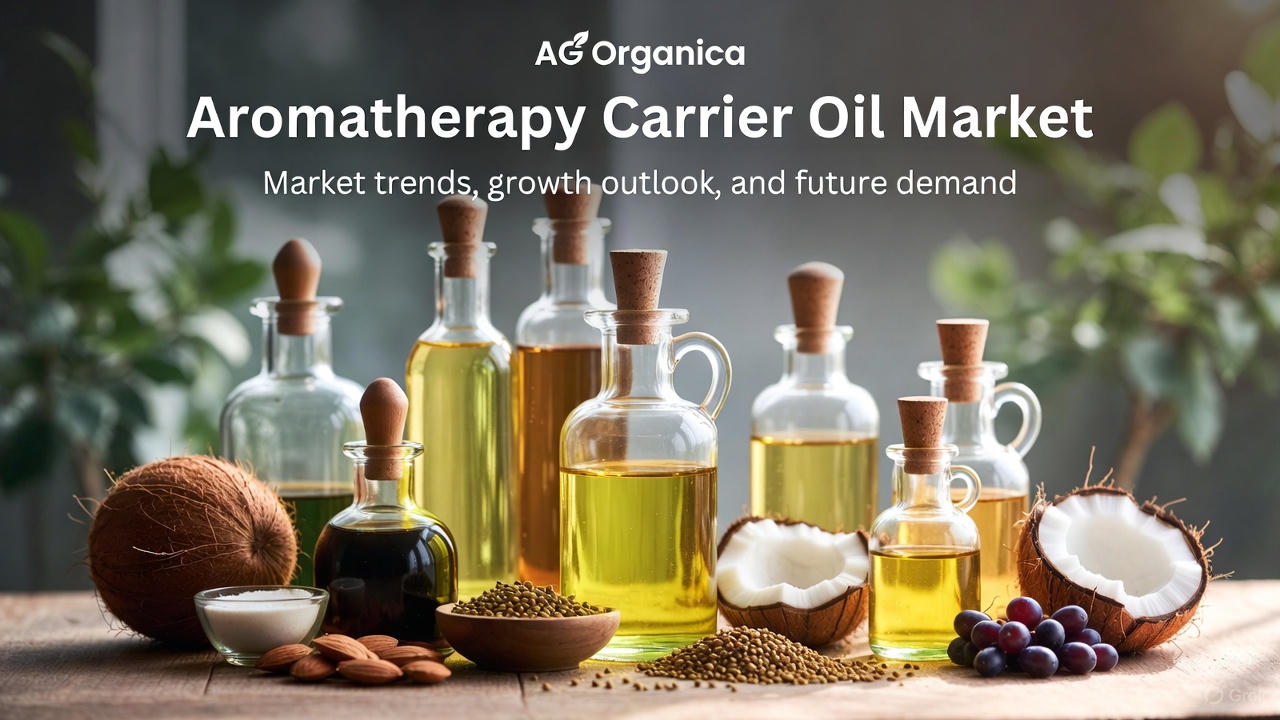
When we talk about aromatherapy, most people think about the scent of lavender or the cooling feeling of peppermint. These are the essential oils—the "stars" of the show. But in the world of professional manufacturing and wellness, there is a silent partner that does most of the heavy lifting. That partner is the carrier oil.
At AG Organica, we have watched this market grow from a niche hobby into a multi-billion-dollar global industry. As we look ahead at the next seven years (2025 to 2032), it is clear that carrier oils are no longer just "fillers." They have become a vital part of the global wellness economy.
This guide is meant to help you understand where the market is going, why it is growing, and what you should look for if you are a brand owner or a buyer.
Why This Market Matters Now
You might wonder why we are talking specifically about the years 2025 to 2032. It’s because the world has changed how it views health. People are moving away from synthetic chemicals and looking for things that come from the earth.
Carrier oils—like Jojoba, Sweet Almond, and Coconut—are the foundation of this movement. Without them, you cannot safely use essential oils on the skin. You cannot make a high-end face serum or a professional massage oil.
The market is expected to grow steadily over this period. Experts suggest it could reach nearly $3.5 billion by 2032. This isn't just a "trend" or a "bubble." It is a fundamental shift in how people take care of themselves. For businesses, this means a long-term opportunity for growth, but only if they understand the quality and sourcing behind the products.
What Are Aromatherapy Carrier Oils?
If you have ever touched a pure essential oil, you know it is incredibly strong. It is concentrated plant power. If you put it directly on your skin, it can cause redness or irritation.
This is where the carrier oil comes in.
- What they do: They "carry" the essential oil onto your skin. They dilute the potency so it is safe to use.
- Why we need them: Essential oils evaporate very quickly. Carrier oils are heavier and oily; they stay on the skin and help the essential oil absorb slowly.
- Where they come from: Most carrier oils are pressed from the fatty parts of a plant—like the seeds, nuts, or kernels.
Think of it like a cup of coffee. The espresso is the essential oil (strong and concentrated), and the water or milk is the carrier (the part that makes it a drink you can enjoy).
How the Aromatherapy Carrier Oil Market Has Evolved
Years ago, you could only find carrier oils in small health food stores or at a local massage therapist’s office. It was a "hand-made" industry.
Today, it is a sophisticated manufacturing industry. We have moved from small glass jars to large-scale, ISO-certified production facilities. Brands are now asking for cold-pressed oils, organic certifications, and traceability reports.
In the early days, people just wanted "oil." Now, they want "Jojoba oil sourced from a specific region, cold-pressed to keep the vitamins alive, and tested for purity in a lab." This evolution shows that the market has matured. Buyers are smarter, and the products are better.
Global Market Overview (2025–2032)
As we move through the 2020s, the demand for carrier oils is following a steady upward path.
- Steady Growth: We are seeing a consistent growth rate (often called CAGR) of about 10% per year. This is a very healthy number. It means the market is doubling in size every seven to eight years.
What’s different this decade?
In the past, growth was driven by a few "wellness fans." Now, it is driven by mass-market demand. You can find carrier-oil-based products in supermarkets, luxury hotels, and pharmacies.
The next few years will see a focus on functional beauty. People don't just want an oil that smells good; they want an oil that fixes a problem—like dry skin, scalp health, or stress.
Key Growth Drivers Explained Simply
Why is everyone suddenly buying carrier oils? There are four main reasons.
- Rise of Stress-Related Problems: Our lives are busier and more stressful than ever. People are looking for small ways to relax at home. A 10-minute massage or a drop of oil in a bath has become a simple, affordable way to manage stress. This creates a huge demand for "base" oils that can be used every day.
- The "Home Spa" Movement: During the last few years, people learned how to take care of themselves at home. Instead of going to an expensive spa once a month, they are buying bulk oils and making their own blends. This has shifted the market from "professional-only" to "everyone."
- Clean Beauty and Natural Skincare: Consumers are reading labels. They see words like "parabens" or "synthetic fragrance" and they put the product back on the shelf. Carrier oils are the ultimate "clean" ingredient. They are 100% plant-based, which makes them a favorite for brands that want to be seen as natural.
- The Expansion of Private Labels: Many new brands are starting up without building their own factories. They use private label manufacturers (like us) to create their products. This makes it easier for a small entrepreneur to start a skincare line, which in turn drives up the demand for bulk carrier oils.
Popular Carrier Oils Shaping the Market
Not all oils are created equal. Some are "staples" that every brand needs, while others are "specialty" oils.
- Sweet Almond Oil: This is the most common carrier oil in the world. It is light, has a very mild scent, and is very affordable. Most massage therapists use this as their main base. It’s also a favorite for baby products because it is so gentle.
- Jojoba Oil: Technically, Jojoba is a liquid wax, not an oil. It is special because it is very similar to the natural oils our skin produces. This makes it incredible for face serums. It doesn’t clog pores and has a very long shelf life, which brands love.
- Coconut Oil (and Fractionated Coconut Oil): Standard coconut oil is solid at room temperature. For aromatherapy, we often use Fractionated Coconut Oil. This is a version that stays liquid. It is completely odorless and non-greasy, making it the perfect "blank canvas" for essential oils.
- Grapeseed Oil: This is a "dry" oil. It absorbs into the skin almost instantly. It’s very popular for people with oily skin who don't want to feel "greasy" after using a product.
- Rosehip and Argan Oil: These are "luxury" carrier oils. They are packed with vitamins and antioxidants. You usually find these in high-end anti-aging face oils. They are more expensive, but the demand is high because they actually produce results.
Application-Based Market Breakdown
Where is all this oil going? It’s not just for massage.
- Skincare and Cosmetics: This is the biggest part of the market. Carrier oils are the main ingredient in body lotions, face creams, and lip balms.
- Hair Care: Have you noticed more "scalp oils" on the market? Oils like Castor or Argan are being bought in bulk to help with hair growth and shine.
- Massage and Spa: This remains a steady market. Spas need large quantities of oil every week.
- Wellness and Home Use: This includes DIY kits and "ready-to-use" aromatherapy rollers that you see at the checkout counter of many stores.
Regional Market Insights (Simple and Clear)
The world doesn't buy oil the same way. Each region has its own habits.
- North America (The Largest Market): The U.S. and Canada are currently the biggest buyers. There is a huge culture of "self-care" here. Brands in North America are very focused on organic and non-GMO labels. If you want to sell in this market, you need the right paperwork.
- Europe (The Sustainable Leader): Europe has the strictest regulations in the world for cosmetics. Buyers here care deeply about sustainability. They want to know that the oil was produced without harming the environment. Glass packaging is also very popular in Europe.
- Asia-Pacific (The Fastest Growing): China, India, and Southeast Asia are seeing a massive boom. As people there have more money to spend, they are looking for premium wellness products. India, in particular, has a long history with oils (Ayurveda), so there is a natural trust in these products.
- Middle East and Africa: This region is becoming a hub for "luxury" oils. There is a high demand for rich, heavy oils like Olive or Argan, which are used in traditional beauty rituals.
Buyer Expectations Are Changing
If you are a business owner buying carrier oils today, your job is harder than it was ten years ago. Why? Because your customers are asking more questions.
- Traceability: People want to know the "story" of the oil. Where was the almond grown? Was the farmer paid a fair wage?
- Quality Testing: Brands are now asking for a COA (Certificate of Analysis) for every batch. They want to see the exact chemical makeup of the oil to ensure it is pure.
- Consistency: In the wholesale world, "Batch A" must look and feel exactly like "Batch B." If a manufacturer cannot provide consistency, a brand cannot grow.
Role of Manufacturers in Market Growth
Manufacturers like AG Organica are the backbone of this industry. We are the ones who bridge the gap between a farm and a bottle on a shelf.
A reliable manufacturer does more than just press seeds. They:
- Filter the oil to remove impurities.
- Store it in temperature-controlled environments to prevent it from going bad.
- Manage the supply chain so that when there is a bad harvest in one country, they have a backup plan in another.
The growth of the market depends on manufacturers staying professional. If manufacturers cut corners, the whole industry loses the trust of the consumer.
Challenges in the Market
It is not all easy growth. There are real problems that buyers need to be aware of.
- Raw Material Price Swings: Weather is unpredictable. A drought in a country that produces 40% of the world's lavender or jojoba can cause prices to double overnight. Smart buyers look for long-term supply contracts to protect themselves.
- Adulteration (The "Fake Oil" Problem): Because some oils (like Argan or Rosehip) are expensive, some suppliers mix them with cheaper oils (like Sunflower) and don't tell the buyer. This is a huge risk for a brand’s reputation.
- Shelf-Life Concerns: Carrier oils are natural products. They can go "rancid" if they aren't stored correctly. Manufacturers must use proper antioxidants (like Vitamin E) and correct packaging to ensure the oil stays fresh for 12 to 24 months.
Private Label and Bulk Supply Trends
If you look at the brands on Instagram or Amazon, many of them don't own a single machine. They are "Private Label" brands.
- Why it’s popular: It’s faster. You can launch a brand in three months instead of three years.
- The Trend: Brands are moving away from "generic" private labels. They want custom formulations. They might want a blend of Jojoba, Rosehip, and a specific essential oil that no one else has.
Bulk buying is also changing. Instead of buying "as needed," many brands are pre-booking their supply for the whole year to avoid price spikes.
Sustainability and Ethical Sourcing
In 2025, you cannot ignore the environment.
- Regenerative Farming: This is the new buzzword. It’s not just about "organic"—it’s about farming in a way that actually makes the soil better.
- Water Use: Some crops, like almonds, use a lot of water. Ethical manufacturers are looking for ways to source from farms that use modern, water-saving technology.
- The Buyer's Choice: We have noticed that even if an ethical oil costs 5% more, most modern B2B buyers will choose it because it protects their brand's image.
Market Outlook: What to Expect by 2032
As we approach 2032, the market will likely feel very different.
- Higher Quality Standards: The "cowboy" days of the oil industry are ending. Strict government rules will make it harder for low-quality suppliers to stay in business.
- Educated Customers: By 2032, the average person will know the difference between "refined" and "unrefined" oil.
- Fewer, Stronger Suppliers: Smaller suppliers who cannot afford testing and certifications will likely disappear. Large, reliable manufacturers will become even more important.
How AG Organica Fits Into This Market
At AG Organica, we have spent years preparing for this future. We have seen the market go through many cycles, and we have stayed focused on one thing: consistent purity.
We are one of the leading manufacturers and exporters of carrier and essential oils. Our facility is designed to handle the high-volume needs of global brands while maintaining the "small-batch" quality that aromatherapy requires.
Whether you need 1,000 liters of Sweet Almond Oil or a custom-blended private label face oil, we have the infrastructure to support you. We handle the documentation, the testing, and the global shipping, so you can focus on building your brand.
Final Thoughts
The aromatherapy carrier oil market is built on trust.
A consumer trusts a brand to give them something safe and natural. A brand trusts a manufacturer to give them something pure and consistent. As we look toward 2032, the companies that will win are the ones that don't take shortcuts.
Carrier oils may be the "silent partners" of the wellness world, but they are the foundation upon which the entire industry is built. If you are a buyer or a brand owner, now is the time to look closely at your supply chain. Ensure your partners are ready for the high standards of the next decade.
Would you like to see a sample of our technical documentation for Jojoba or Sweet Almond oil, or would you like to discuss a custom private label blend for your upcoming product launch?