
Top Herbal Oils for Private-Label Manufacturing

The year 2026 has brought a big shift in how people buy beauty and wellness products. In the past, people just looked for a famous brand name. Now, they look at the ingredients first. They want to see plants, seeds, and flowers on the label. This interest in herbal oils is not just a passing trend. It is the new way people live.
Brands are moving away from synthetic chemicals. They want clean and plant-based ingredients because that is what their customers demand. People are more educated about what they put on their skin and hair. They know that natural oils can be very effective without being harsh.
This shift has made private-label manufacturing a huge opportunity. Many entrepreneurs want to start their own brands but do not have a factory. Private labeling allows them to use high-quality oils made by experts and sell them under their own name. It is a fast and reliable way to get into the market.
In this guide, we will look at the top 10 herbal oils that are most requested in 2026. These are the oils that successful brands are using to build trust with their customers. We will explain why they are popular and how they help your business grow.
Why Herbal Oils Are in High Demand for Private-Label Manufacturing
Why is everyone talking about herbal oils for their brand right now? There are a few simple reasons.
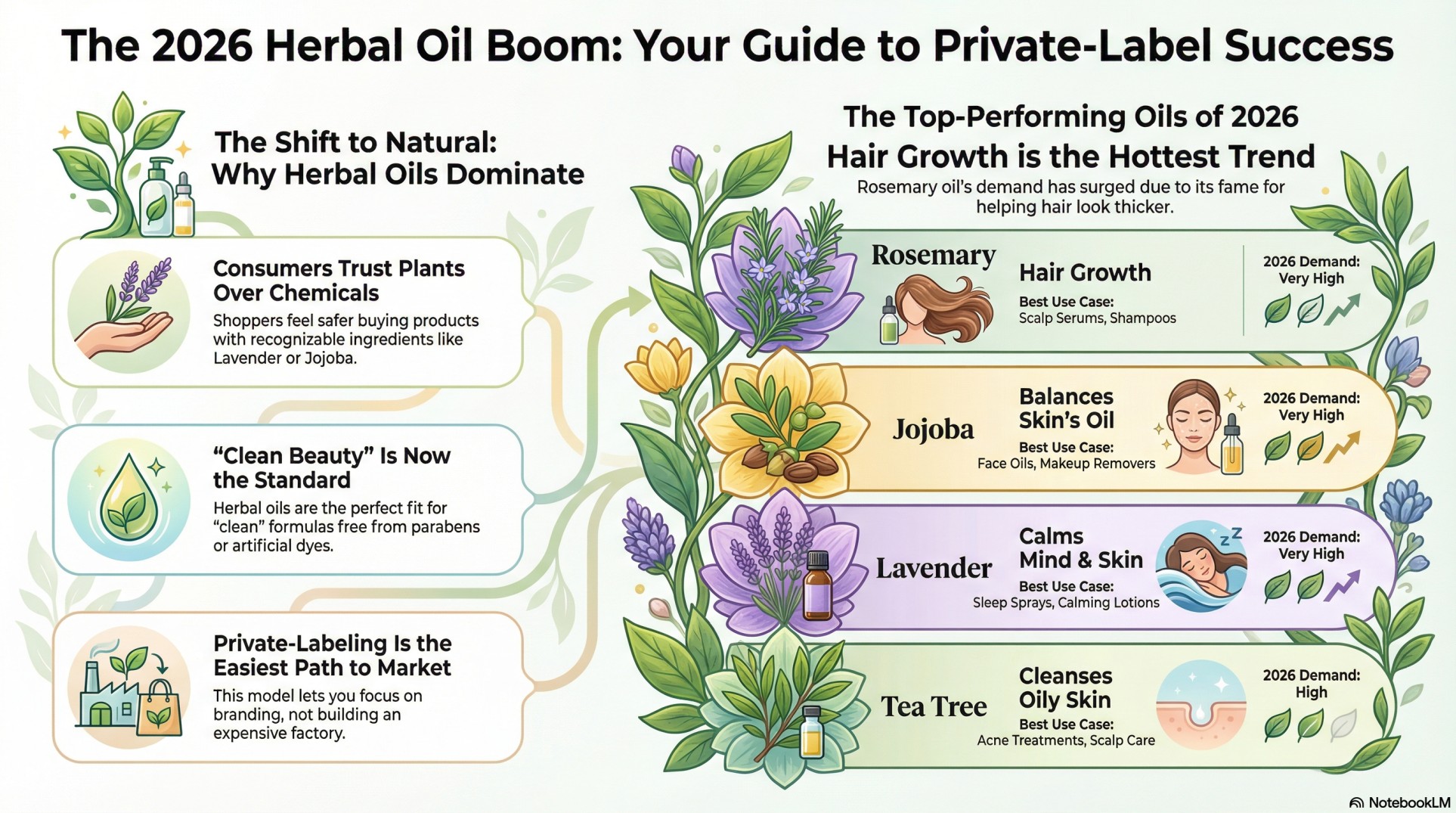
- People trust natural ingredients: In 2026, trust is everything. Customers find it easier to trust an oil that comes from a leaf or a flower than a chemical made in a lab. When they see "Lavender" or "Jojoba" on a bottle, they feel safe. This trust makes it much easier for a new brand to make its first sale.
- Brands want safe and gentle formulas: Nobody wants their products to cause a bad reaction. Herbal oils are generally gentle. They work with the body instead of against it. This makes them perfect for people with sensitive skin. When a brand uses safe ingredients, they get fewer complaints and more repeat customers.
- These oils work for many different products: Herbal oils are very versatile. You can put them in a face serum, a hair shampoo, or a massage oil. One single oil can be the star ingredient in a whole line of products. This helps businesses save money on sourcing while keeping their brand consistent.
- Oils fit the clean beauty trend: Clean beauty is the standard now. It means products are made without "nasties" like parabens or artificial dyes. Herbal oils are the perfect fit for this. They are pure, effective, and look great on a marketing flyer.
- Private labeling is the easiest path: Starting a factory is very expensive. With private labeling, a brand can get high-quality oils that are already tested and ready to go. It allows a business owner to focus on marketing and talking to customers instead of worrying about big machines.
Factors That Make an Herbal Oil “High Demand”
Not every oil becomes a bestseller. Some oils stay on the shelf while others sell out in days. Here is what makes an herbal oil "high demand" for brands in 2026.
- Safe for skin. The best oils are those that most people can use without any trouble. If an oil is known to be very safe, brands will choose it every time.
- Many uses. A popular oil is usually one that can do more than one thing. For example, an oil that helps with both dry skin and frizzy hair is worth more to a brand than an oil that only does one.
- Stable supply. A brand cannot grow if it keeps running out of ingredients. High-demand oils are usually those that have a stable supply year-round. Brands need to know their manufacturer can provide the oil whenever they need it.
- Good price range. While some oils are very expensive, the most popular ones usually have a fair price. This allows brands to make a profit while still giving their customers a good deal.
- Known benefits. People like to buy what they already know works. Oils like Tea Tree or Lavender have been famous for years. Brands don't have to work hard to explain what these oils do. The name sells itself.
- Fits into trending products. In 2026, people are obsessed with hair growth serums and light face oils. Oils that work well in these specific products are naturally in higher demand.
Top 10 Herbal Oils in High Demand for 2026
Let’s look at the specific oils that B2B buyers and brands are asking for this year. These are the top performers in the market.
-
Tea Tree Oil
Tea Tree oil is a classic that never goes out of style. It comes from the leaves of the Melaleuca alternifolia tree. In 2026, it is still the king of oily skin care.
Why do people want it? It is famous for its ability to clean the skin. It helps with spots and redness. Many people also use it for their scalp if they have flakes or itching. It has a very fresh, medicinal scent that people associate with cleanliness.
It is best used in face washes, spot treatments, and anti-dandruff shampoos. Brands love it because it is effective even in small amounts. The demand remains very high because skin issues are a constant problem for many people.
-
Lavender Oil
Lavender is probably the most famous herbal oil in the world. It is made from the flowers of the lavender plant. It has a sweet, floral smell that almost everyone likes.
People want Lavender because it is very calming. In a busy world, anything that helps people relax is a big seller. It is also very good for soothing minor skin irritations or dry patches. It is one of the few oils that is gentle enough for almost any skin type.
Brands use it in "sleep" sprays, body lotions, and calming face oils. It is a must-have for any aromatherapy line. In 2026, the demand is very high because mental wellness and good sleep are top priorities for consumers.
-
Rosemary Oil
Rosemary oil has seen a massive jump in demand over the last year. It is an herbal oil made from the leaves of the rosemary herb. It smells fresh and a bit like a forest.
The main reason people want it right now is hair growth. Studies and social media trends have made Rosemary famous for helping hair look thicker and stronger. People are moving away from chemical hair treatments and choosing Rosemary instead.
It is the top choice for hair growth serums, scalp oils, and strengthening shampoos. For a private-label brand, this is one of the best oils to start with right now. The demand is very high and shows no signs of slowing down.
-
Peppermint Oil
Peppermint oil is pressed from the leaves of the peppermint plant. It has a very strong, cooling sensation. It feels like a breath of fresh air for the skin and scalp.
People love it because it wakes them up. It is great for tired feet or a sore scalp. It also helps people feel more focused. When you put it in a product, the customer feels it working immediately because of the cooling tingle.
It is used mostly in foot creams, cooling hair masks, and lip balms. It is also popular in aromatherapy for energy. In 2026, it is in high demand for "active" lifestyle brands that focus on sports and recovery.
-
Eucalyptus Oil
Eucalyptus oil comes from the leaves of the eucalyptus tree. It has a very sharp, clear scent. Most people know it from spas or when they have a cold.
In 2026, it is very popular for "spa-at-home" products. People want their bathrooms to feel like a luxury resort. Eucalyptus helps with that. It is also great for clearing the breath and helping with chest congestion in a natural way.
It is best for shower mists, massage oils, and chest rubs. Brands choose it because it adds a premium, clean feel to any product line. The demand is steady and strong, especially in the wellness and home fragrance sectors.
-
Frankincense Oil
Frankincense is often called the "liquid gold" of herbal oils. It is made from the resin of the Boswellia tree. It has a deep, woody, and slightly sweet smell.
People want Frankincense for aging skin. It is known for helping skin look firm and fresh. It is seen as a luxury ingredient. If a brand puts Frankincense on the label, they can often charge a bit more because it is a premium oil.
It is used in high-end night creams, face serums, and anti-aging oils. In 2026, as the population gets older and cares more about skin texture, Frankincense is in very high demand for the "prestige" skincare market.
-
Lemongrass Oil
Lemongrass oil comes from the long, green blades of the lemongrass plant. It has a bright, citrusy smell with a hint of ginger. It is very refreshing and bright.
People want it because it is a natural toner. It helps minimize the look of pores and makes the skin feel tight and clean. It is also a very popular natural scent for products, as it smells like a clean kitchen or a fresh garden.
It is great for skin toners, natural deodorants, and body washes. Brands like it because it is affordable and smells great without needing artificial perfumes. The demand is high for brands that focus on "fresh" and "natural" daily care.
-
Jojoba Oil
Jojoba is technically a liquid wax, but everyone calls it an oil. It comes from the seeds of the jojoba shrub. It is very special because it is almost exactly like the natural oil our skin produces.
People want it because it doesn't feel greasy. It sinks in quickly and works for both oily and dry skin. It is the perfect "base" oil. If you want to make a face oil, you usually start with Jojoba and then add other herbs.
It is the main ingredient in face oils, makeup removers, and body oils. In 2026, it is in "Very High" demand because it is the foundation of almost every clean skincare brand. Every private-label founder needs a good supply of Jojoba.
-
Argan Oil
Argan oil comes from the kernels of the argan tree, which grows in Morocco. It is packed with Vitamin E and healthy fats. It is famous for making things feel soft.
It is mostly wanted for hair repair. It helps smooth down split ends and makes hair shine. It is also very good for dry cuticles and nails. It feels very rich and moisturizing, which people love for dry winters.
It is the star of hair oils, deep conditioners, and hand creams. Even though it has been popular for a long time, the demand remains high in 2026 because it is a "gold standard" for hair health that people trust.
-
Basil Oil
Basil oil is a newer favorite in the private-label world. It is made from the leaves of the basil herb. It has a spicy, herbal, and slightly sweet scent.
People are starting to use it for scalp health. It is believed to help with circulation, which is great for hair roots. It is also becoming popular in luxury skincare for its unique, sophisticated smell. It feels different from the usual "lemon" or "lavender" scents.
It is used in scalp treatments, niche perfumes, and herbal body oils. The demand is "Medium to High" as it is a trending oil for brands that want to offer something unique and different from the competition.
Comparison Chart for 2026
|
Oil Name |
Main Benefit |
Best Use Case |
2026 Demand Rating |
Why Brands Choose It |
|
Tea Tree |
Cleans skin |
Acne / Scalp |
High |
Proven results for oily skin |
|
Lavender |
Calms mind |
Sleep / Soothing |
Very High |
Universal appeal and safety |
|
Rosemary |
Hair growth |
Scalp Serums |
Very High |
Trending heavily for hair |
|
Peppermint |
Cools skin |
Foot care / Energy |
High |
Immediate physical sensation |
|
Eucalyptus |
Clears breath |
Spa / Shower mists |
Medium-High |
Premium "wellness" vibe |
|
Frankincense |
Firms skin |
Anti-aging |
High |
Luxury feel for mature skin |
|
Lemongrass |
Tones skin |
Deodorant / Toner |
Medium-High |
Natural, fresh fragrance |
|
Jojoba |
Balances oil |
Face oils |
Very High |
Perfect skin-like base |
|
Argan |
Repairs hair |
Shine / Split ends |
High |
Trusted "liquid gold" status |
|
Basil |
Scalp health |
Unique serums |
Medium |
New, niche, and herbal |
How Brands Use These Oils in Private-Label Products
If you are a business owner, you might be wondering how to actually turn these oils into products. Here are some real-world examples.
- Face Oils: A brand might take Jojoba as a base, add a little Frankincense for aging, and some Lavender for a nice smell. This creates a "Night Recovery Oil." Because it is 100% plant-based, it appeals to the clean beauty customer.
- Hair Growth Serums: This is the biggest category in 2026. A brand can use Rosemary oil mixed with a light carrier oil. They can put it in a bottle with a dropper. Customers apply it to their scalp every night. It is a simple product with a very high profit margin.
- Shampoos and Conditioners: Brands take a standard natural soap base and add Tea Tree or Peppermint. This turns a basic shampoo into a "Scalp Refresh" shampoo. It gives the product a specific purpose and makes it easier to sell.
- Massage Oils and Balms: For spas or wellness brands, Eucalyptus and Lavender are the favorites. They are mixed into oils or melted waxes to create "Calm Balms." These are great for people who travel or want a quick way to relax at their desk.
- Roll-on Blends: Peppermint and Lemongrass are perfect for small roll-on bottles. People keep them in their bags for an energy boost during the day. These are low-cost items that sell very quickly at checkout counters or in online gift sets.
Why AG Organica Is a Trusted Private-Label Partner
When you are starting or growing a brand, the manufacturer you choose is your most important partner. You need someone who is professional and reliable. Here is why brands work with AG Organica.
- Large Manufacturing Capacity - We have the space and the machines to produce large amounts of oil. This means as your brand grows, we can keep up with you. You won’t have to switch suppliers just because you got a big order from a major retailer.
- Clean and Safe Processing - We follow very strict rules to keep our facility clean. Our oils are processed carefully to make sure they stay pure and effective. We know that your brand’s reputation depends on the quality inside the bottle.
- Bulk Supply and Export - We don't just sell small bottles. We provide oils in bulk for large manufacturers. We also have a lot of experience with international shipping. If you are a brand in the USA, Europe, or anywhere else, we know how to get the oil to you safely and on time.
- Private-Label and White-Label Options - Do you want a product that is ready to sell? We offer white-label products where we have already done the formulation. You just pick the bottle and put your label on it. Or, if you have a special idea, we can help with private-label manufacturing to make your specific vision a reality.
- In-house Quality Checks - We have our own labs to test every batch of oil. We check for purity, color, and scent. We make sure that what is on the label is exactly what is in the oil. This gives our B2B partners peace of mind.
- Custom Formulations - Every brand wants to be unique. Our team can help you create a custom blend of herbal oils that no one else has. This helps you stand out in a crowded market.
Tips for Picking the Right Oil for Your Brand
Choosing the right oil can feel overwhelming. Here are some practical tips to help you decide.
- Think of your target customers. Who are you selling to? If you are selling to young people with oily skin, Tea Tree is a better choice than Frankincense. If you are selling to people who love the gym, Peppermint will be very popular. Always think of the customer first.
- Know what problem your product solves. Does your product help people sleep? Then pick Lavender. Does it help them grow hair? Pick Rosemary. A product that solves a specific problem is much easier to market than a "general" oil.
- Check the scent your market prefers. Some people love strong, herbal smells (like Basil or Tea Tree). Others prefer sweet or floral smells (like Lavender). It is often a good idea to have one of each in your product line.
- Understand the pricing. If you are making a product for a discount store, you need oils that are more affordable, like Lemongrass or Tea Tree. If you are making a luxury product for a high-end spa, you can afford Frankincense or Argan.
- Pick oils that match your brand’s purpose. If your brand is about "Energy and Focus," stick to Peppermint, Lemongrass, and Eucalyptus. If your brand is about "Calm and Beauty," go with Lavender, Rose, and Jojoba. Staying consistent helps people remember your brand.
Conclusion
The demand for herbal oils in 2026 is stronger than it has ever been. People want simplicity. They want plants. They want results they can see and feel. For any beauty or wellness brand, these oils are the building blocks of a successful business.
The 10 oils we discussed—from the hair-growing power of Rosemary to the skin-balancing magic of Jojoba—are the top choices for a reason. They work, they are safe, and people already love them.
By using private-label manufacturing, you can skip the hard part of building a factory and get straight to building your brand. It is a smart, modern way to do business.
AG Organica is here to support you in this journey. Whether you need bulk oil for a large factory or a private-label partner to help you launch your first serum, we have the quality and the experience to help you succeed.